Children's Better Health Institute
CAMPING IN OR OUT (US Kids, Cover Story)
ONE TEE-RIFFIC KID (US Kids, Cover Story)
PART SLED, PART ROCKET: LUGE (US Kids, Cover Story)
THERE'S SNOW PLACE LIKE HOME: CROSS COUNTRY SKIING (US Kids, Cover Story)
DIGGING DINOS: WYOMING DINOSAUR CENTER (US Kids, Cover Story)
LIVING IN THE STATE OF YO-YO (US Kids, Cover Story)
MY GRANDFATHER MADE ME: TOMMY SMOTHERS (US Kids)
WITH A HOP, SKIP AND A JUMP: ROPE SKIPPING (US Kids, Cover Story)
SWIM, CYCLE, RUN: TRIATHLETES (US Kids, Cover Story)
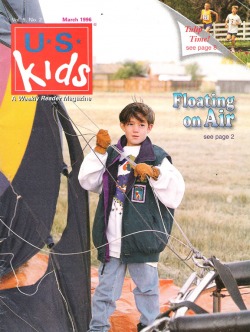
FLOATING ON AIR: HOT AIR BALLOONING (US Kids, Cover Story)
TAKING CARE OF DESTINY: HORSEBACK RIDING (US Kids, Cover Story)
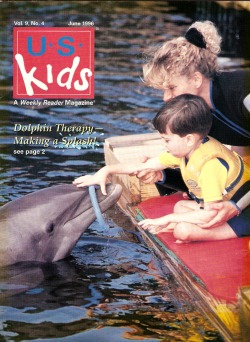
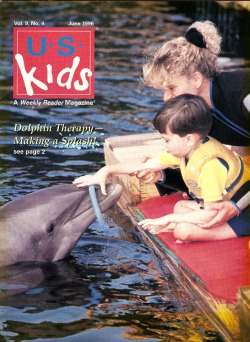
DOLPHIN THERAPY: MAKING A SPLASH (US Kids, Cover Story)
OLYMPIC KID CONNECTION (US Kids, Cover Story)
TAEKWONDO'S GOLDEN BOY (US Kids, Cover Story)
GOING BIG IN COLORADO: SNOWBOARDING (US Kids, Cover Story)
MADE FOR MANATEES (US Kids, Cover Story)
JUGGLING SUCCESS: 13-YEAR-OLD JUGGLER (US Kids)
GEAR UP FOR THE ROBOT ZOO (US Kids)
BAG A NEW HOBBY: FOOTBAG (US Kids)
PISTOL PACKING PALEONTOLOGIST (Children's Digest)
SKYDIVING: WHAT A BLAST/INDOOR SKYDIVING (Cover Story, Child Life)
DINO BUILDER (Child Life)
CHRISSIE ZARTMAN: OVER THE TOP/VOLLEYBALL (Child Life)
MUSH, SLUSH AND GLORY: SLED DOGS (Child Life)
SOCK IT TO ME! HISTORY OF SOCCER (Child Life)
Shrouded in Mystery: Mummies and Ancient Burial
by Kelly Milner Halls
Do kids love to study science and history? Ask a group of 9- to 12-year-olds and watch these subjects crash and burn. “That’s because they’ve become an exercise in repetition and memorization,” says author and former teacher James M. Deem. “But that doesn’t have to be the case.”
Like other devoted children’s nonfiction writers, Deem has adopted creative measures to spark scientific and historical bliss. He has enlisted the field of archaeology and an army of mummies to help with academic flare. His books and his Web site about archaeology and dead people help bring yawn-spawning science and social studies to life.
Mummies and their ghoulish image appeal to young people. “You may have a few squeamish kids,” Deem admits, “but most of them are really into the subject if it’s presented in a way that engages them.” Graphic photos are a part of that hypnotic blend.
Are teachers as devoted to books about mummies and burial practices as their students? “No,” Deem says. “Some teachers are grossed-out and don’t want to see mummy books in their classrooms. But that’s a big mistake. My philosophy is simple. If we can see mummies in a public museum, why shouldn’t kids read about them in books? Even reluctant readers get into this topic. It sounds like scary movies, but the kids are literally being pulled into learning about history and science, without knowing it.”
Bone-chilling photos may spark an interest, but according to Deem, lasting educational impact relies on good storytelling. “Some books are filled with gross pictures,” Deem says. “But what stays with a child are the stories that go along with the pictures—a glimpse at the ancient civilization or a look at the archaeologist who discovered the mummy. Those stories bring the mummies to life.”
How many different kinds of mummies exist around the world? “Egypt may be the best known location,” Deem says, “but there were at least 20 civilizations or societies that practiced mummification. And dozens and dozens of mummies were preserved by an accident of nature.”
Such diversity makes mummies and the archaeological finds that go with them a natural for the classroom. But Deem suggests that archaeology brings another forbidden topic into focus as well—death. “The subject is not well addressed in our society,” he says. “People don’t want to talk about death because mortality scares them. But mummies allow kids to look at death in a new way. They think, ‘If I can look at this and talk about this, maybe it’s okay to talk about my dead Uncle Bob, too.’ It makes the topic feel a little safer.”
“I don’t want to encourage kids to gawk,” Deem says. “But I do want them to wonder who these people were and what stories their remains are silently telling.”
Bibliography Aliki. Mummies Made in Egypt. 1979. 32p. HarperTrophy, paper, $6.99 (0-06-446011-8).
Gr. 1–3. A strong, beautifully illustrated introduction to the concept of Egyptian mummies and the afterlife beliefs that inspired them. Aliki’s text is as clear and praiseworthy as her signature artwork.
Colman, Penny. Corpses, Coffins, and Crypts: A History of Burial. 1997. 224p. Holt, $17.95 (0-8050-5066-3).
Gr. 7–up. Colman explores the topics of death and burial and the customs that have grown up around them in cultures around the world and throughout history. This sensitive, candid title mixes heartfelt personal experience with solid, sometimes gruesome information about the history of burial.
Deem, James M. Bodies from the Bog. 1998. 48p. Houghton, $16 (0-395-85784-8).
Gr. 3–6. Bog bodies—people naturally mummified by oxygen-starved peat bogs—have been found throughout Europe. Deem explores the lives and deaths of more than half a dozen individuals, as well as the mysterious chemical accident that made their preservation possible, in this fascinating book. Deem’s Web site at http://www.jamesmdeem.com features many useful links about mummies for educators and students.
Deem, James M. How to Make a Mummy Talk. Illus. by True Kelley. 1995. 184p. Houghton, $16
(0-395-62427-4).
Gr. 3–6. Deem mixes the gruesome with giggles to produce this fully illustrated digest of historical mummies from around the world. Black-and-white art perfectly highlights the sometimes quirky realm of the dead, as seen through Deem’s respectful eyes. For a fictional title in which the mummy really does talk, see Eve Bunting’s lyrical picture book I Am the Mummy Heb-Nefert (Harcourt, 1997), in which a female mummy reminisces about the day she became the pharaoh’s wife.
Hansen, Joyce, and Gary McGowan. Breaking Ground, Breaking Silence: The Story of New York’s African Burial Ground. 1998. 144p. Holt, $17.95 (0-8050-5012-4).
Gr. 7–12. As astonishing as it sounds, an eighteenth-century African slave burial ground was discovered under the streets of Manhattan in 1991. This amazing collection of photographs and Hansen’s occasionally repetitive text tell the story of those lost Americans, including how they endured their burdensome way of life and how they died.
Hawcock, David. Amazing Pop-Up Pull-Out Mummy Book. 2000. 12p. DK, $19.95 (0-7894-6507-8).
Gr. 4–6. Both educators and young readers will flock to this imaginative pop-up book created by the author of Amazing Pull-Out Pop-Up Body in a Book (DK, 1997). Archaeological proof of embalming techniques is among the book’s highlights, as is the great pull-out classroom visual that comes with this innovative book. For more on mummies and Egypt see DK’s Mummies and the Secret Worlds of Ancient Egypt by John Malam, Mummy by James Putnam, and Ancient Egypt Revealed by Peter Chrisp.
Holub, Joan. Valley of the Golden Mummies. 2002. 32p. Grosset & Dunlap, $14.89 (0-448-42817-2); paper, $5.99 (0-488-42661-7).
Gr. 2–4. This title in the Smart about History series represents a fictional student’s report on the Valley of the Golden Mummies in Egypt. The dynamic page design and Holub’s appealing cartoon drawings will engage readers.
Logan, Claudia. The 5,000-Year-Old Puzzle: Solving a Mystery of Ancient Egypt. Illus. by Melissa Sweet. 2002. 48p. Farrar/Melanie Kroupa, $17 (0-374-32335-6).
Gr. 3–5. A fictional boy named Will joins Giza 7000X, an actual archaeological dig in 1920s Egypt, and participates in the tedious, thrilling process of excavating a tomb. Will’s postcards home, documentation and photos from the actual excavation, and factual sidebars accompany Sweet’s bright paintings. This title gives an excellent idea of the intense, careful work demanded in archaeological excavations.
McIntosh, Jane. Archaeology. 2000. 64p. DK, $15.95 (0-7894-5864-0).
Gr. 2–6. Like most Eyewitness books, this glance at archaeology is illustration rich, text light. But don’t mistake brief text for unimportant text. Archaeology is a great book for reluctant readers, who will learn about ancient civilizations through vivid photographs and illustrations as well as energetic text.
Mummies, Gods, and Pharaohs. 2000. 50p. Workman, $9.95 (0-7611-1757-1).
Gr. 2–up. Part of the Fandex Family Field Guide series, this look at King Tut, the Valley of the Kings, and more than 150 Egyptian tombs will dazzle even the most resistant readers. Don’t miss the die-cut cards on hieroglyphics, the Sphinx, Howard Carter, and grave robbers.
O’Connor, Jane. The Emperor’s Silent Army: Terracotta Warriors of Ancient China. 2002. 48p. Viking, $17.99 (0-670-03512-2).
Gr. 4–7. This fascinating title reveals the story behind a buried army of 7,500 terracotta soldiers and horses discovered in China in the 1970s, now known to be part of the first emperor’s tomb. O’Connor’s engaging text describes the army’s excavation after more than 2,200 years, and full-color photographs show the individuality of the statues, created to protect the tomb.
Pemberton, Delia. Egyptian Mummies: People from the Past. 2001. 48p. Harcourt, $18 (0-15-202600-2).
Gr. 2–6. Honored by the National Science Teacher’s Association as a 2002 Best Book, Pemberton’s lively title uses more than 100 photographs and a spirited text to explore how forensic science helps scientists and average citizens understand the life and times of ancient Egypt, and archaeology in general. Includes a glossary, index, and bibliography.
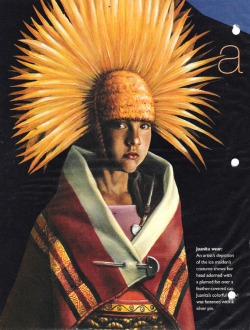
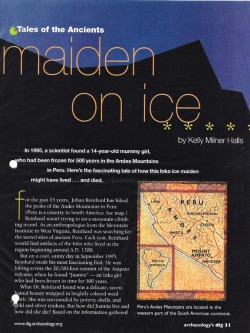
Reinhard, Johan. Discovering the Inca Ice Maiden: My Adventures on Ampato. 1998. 48p. National Geographic, $19.95 (0-7922-7142-4).
Gr. 2–6. World adventurer Reinhard tells young readers of his astonishing find—an approximately 14-year-old Inca girl sacrificed to the angry god of Ampato, a Peruvian volcano, then mummified in frost and ice more than 520 years ago. Remarkable photo documentation of the mummy and the wealth of artifacts found with the so-called Ice Maiden make this a worthwhile purchase for any library in need of archaeological gems.
Rice, Melanie, and Christopher Rice. Pompeii: The Day a City Was Buried. 1998. 48p. DK, o.p.
Gr. 2–6. In a noble attempt to bring ancient history to life, this exciting book in the DK Discoveries series uses short bursts of lively text alongside dozens of photographs and illustrations. It tells the story of the Roman city of Pompeii, and how it was swallowed and preserved forever by the sudden and deadly eruption of a volcano.
Sloan, Christopher. Bury the Dead: Tombs, Corpses, Mummies, Skeletons, and Rituals. 2002. 64p. National Geographic, $18.95 (0-7922-7192-0).
Gr. 5–9. From Peru to Egypt to Russia to China, this in-depth look at the archaeological study of ancient burials gives wonderful insight into long-vanished cultures. Stunning full-color photos of mummies and artifacts as well as an attractive page design translate into high reader appeal, and the smartly written text is engaging.
Tubb, Jonathan N. Eyewitness: Bible Lands. 2000. 64p. DK, $15.95 (0-7894-5770-9).
Gr. 3–6. The New York Times called this title a “mini-museum between the covers of a book.” Rich in photographs, illustrations, and well-crafted text, it explores the archaeological evidence—trinkets, jewelry, weapons, coins, and more—that goes hand-in-hand with biblical settings. Death and burial is the focus of one chapter.
Wilcox, Charlotte. Mummies and Their Mysteries. 1993. 64p. Carolrhoda, $18.95 (0-87614-
767-8); paper, $7.95 (0-87614-643-4).
Gr. 5–8. Riveting and crisply produced photos mark this introduction to mummies found in Egypt, Peru, and the Far East, as well as cave mummies and mummies in bogs and frozen in ice. This thoroughly researched volume presents a discussion of the various processes of mummification and numerous factual sidebars.
Wilcox, Charlotte. Mummies, Bones, and Body Parts. 2000. 64p. Carolrhoda, $18.95 (1-57505-428-0); paper, $7.95 (1-57505-486-8).
Gr. 4–7. In this solid title, Wilcox touches on many aspects of how death is treated in various cultures, including the indigenous peoples of the Americas. Embalming techniques and cryonics are discussed, and uncompromising photos of important archaeological finds are scattered liberally throughout the text.
Kelly Milner Halls is a Spokane-based freelance writer. Her latest book, Dinosaur Mummies, will be published later this year.
Apolo Ohno Gives 110%
Guidepost for Teens
by Kelly Milner Halls
Short-track speed skating is a fast-paced, cutthroat sport. The ice is slick, the blades are razor-sharp, and the turns are wicked. One mistake, one small miscalculation, and you slam into the wall—hard. To make it in short-track, you have to be tough. Apolo Anton Ohno is one tough guy.
He’s also one really nice guy His amazing performance on the ice at the 2002 Olympics in Salt Lake City not only won him gold and silver medals—it won him a spot in the hearts of fans worldwide. So how did this cute guy with the signature soul patch become a short-track phenomenon? Natural talent—and hours (and hours!) of training.
Apolo grew up in Seattle, the son of a single father. His dad wanted to keep him out of trouble, so he worked hard to make athletics—including swimming and inline skating—his son’s focus. Apolo first stepped onto the ice after mastering the inline skating circuit. “Just to try something different,” he says. He quickly blew the competition away.
Once he realized he had the talent to be an elite short-track skater, he gave it his all—“110 percent,” as he likes to say. Five years later, at age 19, Apolo became a superstar.
Guideposts for Teens caught up with Apolo as he was training for the 2003 World Championship in Warsaw, Poland. (He ended up taking silver in the 3,000 meters there!)
GP4T: We heard that you were watching the 1994 Olympic Games in Lillehammer, Norway, on television when you first got the urge to try short track. True?
Apolo: Yes, that’s true. The speed was the number-one attraction for me. Everything looked so smooth. I was amazed by how far the skaters could lean into the turns. It didn’t look natural or real. I kept thinking, “How are they doing that?” And I knew I was going to give it a try.
GP4T: Did you realize you had a talent for it right away?
Apolo: No. At first I was pretty bad—I busted my butt a lot! But I practiced, and I learned a lot. I finally believed I might be really good at it after a coach I respected noticed me. I started to realize my potential at the Olympic Training Center in Lake Placid in 1996.
GP4T: How do you deal with the mental pressure of competing in such an aggressive sport?
Apolo: It is a very aggressive sport, that’s true. But I think any athlete has to learn to deal with pressure. I have my off days and my on days. Most of the time, you just push past it and make things happen. I think the pressure actually makes me perform better sometimes. And once I’m on the ice, all I think about is skating.
GP4T: What’s most important to winning the short-track events—endurance, speed, or focus?
Apolo: I think it’s the whole package, really. You have to have it all. If you’re just fast, so what? Everybody’s fast. If you’re just focused, again, everyone is. You have to pull all those things together to win.
GP4T: What were you like as a teenager in Seattle, before you went to Lake Placid?
Apolo: You know, I was a normal kid. I hung out with my friends, I played basketball, went to the park, had barbecues. As long as I was with my friends, I was happy.
GP4T: Do you think the fact that your father was a single parent made the two of you closer?
Apolo: I do. I think sometimes that’s how it works out with single parents. He supports me 100 percent. He wants me to succeed in sports and in life, so it’s a partnership. I think we take our parents for granted sometimes, but they’re so important. Eventually, most people figure that out.
GP4T: You were so hot on MTV’s Total Request Live after the Olympics. How did you learn to break-dance?
Apolo: Ha! The break dancing was a little something that I used to do for fun back in Seattle—something all my friends did during lunch break at school. But it was fun doing it and being on TRL—just awesome!
GP4T: What kind of music do you like, and what’s in your CD player right now?
Apolo: I like mostly hip-hop and R&B. Right now, I have a burn mix in my CD player that includes a guy named Wayne Wonder, an R&B singer from Jamaica.
GP4T: What sports do you play just for fun?
Apolo: Short-track is my specialty, but I do enjoy many other sports—pretty much all other sports, actually. But I do them for fun, so it’s no high-caliber performance.
GP4T: Is there a sport you’ve tried that you actually stink at?
Apolo: Snowboarding! I was in Italy a while back, and I went snowboarding one time. I kept falling, and the people on the lifts were looking down at me, kind of stunned. I don’t think they’d ever seen one person do so many flips on accident. I kept landing on my head.
GP4T: Do you have to worry about getting hurt when you try new sports?
Apolo: Well, I try to get out there and have fun and live my life. But I have to be a little tentative, because an injury would put an end to my career.
GP4T: Every girl in America is dying to know . . . do you have a girlfriend?
Apolo: No, I don’t have a girlfriend. It’s very hard to keep a steady relationship because I’m always traveling, and my training schedule isn’t exactly the best for relationships!
GP4T: What’s next for you?
Apolo: I’m training and competing right now, so my mind and goals are focused on short-track. Beyond that, I’m not certain. I would love to pursue an entertainment career. With my success in the Olympics and through my sport, it really has shown me so many options that I could go with in my future. Only time will tell.
GP4T: What would you like people to know about the real Apolo Ohno?
Apolo: I’d like them to know that I’m just normal—that I focus my time and energy toward something I love and that it has paid off in the long run. But I like to do what most teens like to do, hang out with my friends and have a good time.
GP4T: What advice do you have for teens?
Apolo: Follow what you believe in. Don’t let anybody or anything stop you from reaching your goals! Dream big and have fun.
Some fast facts on the short-track champ
• Apolo finished high school (with great grades) via the Internet Academy.
• He once sang (Alleluia!) in an all-boys choir.
• He was a regional champ in breaststroke as a swimmer.
• He was one of People magazine’s “Most Beautiful People” in 2002.
• He had the flu at the 2002 Olympics—he was sick in bed for four days before he skated!
True Colors
Special to The Atlanta Journal-Constitution, News for Kids
Date: 1997-1998 Roswell student whose parents are of different races is working to win Project RACE.
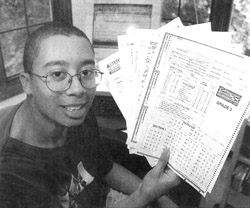
When 14-year-old Roswell resident Ryan Graham first talked to a committee of Congress members in Washington six years ago, he was one of the youngest Americans ever to testify. He was a fourth-grader with a vision -- a little kid with a big idea.
"My mom is white, my dad is black," Ryan explained to News for Kids. That makes him multiracial -- a person with two distinct racial identities.
"Most federal forms force me to choose between those two races," Ryan said. "But that bothers me because I am BOTH." The forms Ryan is talking about are for things such as taxes, employment and school registration.
To add to the confusion, the Census Bureau -- the federal agency that keeps track of just who lives in America -- asks multiracial children to choose, or claim, the race of their mothers as their own race. The Census Bureau takes a big survey every 10 years. Its next survey won't be conducted until 2000.
The 1990 survey revealed that two-thirds of people surveyed who had one black parent and one white parent called themselves black -- regardless of their mother's racial heritage.
But what other people decide isn't the point, Ryan said.
"It should be up to the individual," he says. And so, for the past six years, he has worked hard (alongside his mother, Susan) to change the way our government sees and defines skin color. Susan Graham is founder of an organization called Project RACE, which stands for "Reclassify All Children Equally."
Ryan's big plan is to convince Congress that adding a "multiracial" box to government forms is not only smart, but fair.
"Can you imagine how you would feel if you were a kid and you had to walk up and ask the teacher, in front of the whole class, 'Where do I put my X?' " Ryan says. "It makes a lot of kids feel alienated and alone, when they should feel proud of who they are."
In addition to his work in Washington, Ryan has been on TV news shows on networks including CNN, ABC and Nickelodeon. He's testified before some state goverments including Georgia and Michigan. He helped confince lawmakers in both states that adding a "multiracial" choice totheir forms was a good thing to do. At this time, eight states have added the multiracial choice to some forms. Those states are Georgia, Florida, Ohio, Illinois, Indiana, Maryland and North Carolina. But for Ryan, that just means there are 42 more states to go.
In 1990, 3 million citizens told the Census Bureau they were living with someone of a different race, and had given birth to 2 million children. According to the New York Times, a 1995 telephone survey sponsored by the federal government found that 1.6 percent of the people questioned considered themselves to be "multiracial."
With less than 2 percent of the American public affected, you might think the multiracial issue isn't a big deal.
"But it is to us," says Ryan. "One day a kid asked me if I was 'mixed.' I said, no, I'm multiracial. He said, 'What's the difference?' and I said, puppies are mixed. People are multiracial."
House Speaker Newt Gingrich seems to agree. In a speech he gave in June 1997, Gingrich supported Ryan's cause.
Ryan says it's really not just a matter of a box on a test or on a federal form.
"It's a way to stand up and say it doesn't matter what color your skin might be," he says. "What matters is who you are inside."
Originally appeared in the Atlanta Journal Constitution
Also posted on Graham's PROJECT RACE website.
http://www.projectrace.com/inthenews/archive/inthenews-ununun.php
Materialism Bug
(An EdPress Finalist)
Itching to get the latest, greatest toys? Pestering your parents for more clothes and games and gadgets and STUFF? Look out! You may have been bitten by…The Materialism Bug
by Kelly Milner Halls
Every December, just before Christmas, millions of kids begin a yearly ritual: making out THE LIST. A trendy doll with all the accessories. The official sports jersey of your favorite player. The 25 Beanie Babies you must have for your collection. The newest, fastest video game system. Sound familiar?
Itching to own
What kids want for Christmas and birthdays—and all the days in between—controls how a lot of parents spend their cash. And all that spending really adds up.
Consider the Pokémon craze. Nintendo sold 2.6 million Pokémon game cartridges (most to kids 8 to 12) last Christmas. And another hot sensation, the Furby, had even Pokémon beat. Tiger Electronics sold 8 million of the googly-eyed creatures in less than a year.
Ask 9-year-old Vanessa how many of those $29.95 Furbys wound up in her overstuffed room and she shyly admits, "Four. I guess I went a little bit overboard."
Bugged to buy
According to Chicago psychologist Dr. Antoinette Saunders, Vanessa is not alone. "Kids sometimes get caught up in collecting what they want rather than appreciating what they have," she says. That urge to accumulate things is called materialism—getting and keeping more than you actually want or need.
How do kids fall victim to the materialism bug? Sometimes it’s hard to avoid. Watch your favorite TV show, and you’ll see lots of commercials aimed at you—and other kids. Newspaper and magazine ads want you believe that cool kids have it all. And if you want to be cool, you need it all, too. Companies work hard to convince you that their products—especially expensive products—are "must-haves." When Pokémon cries out, "Gotta catch ’em all," they want you to believe you need all 151 of ’em!
Swat team
Here's the good news: Kids can squash the materialism bug! How?
1. Keep it simple. Look around your room. Do you have more clothes than you can possibly wear? Do you have toys you hardly ever play with? "Do something about it," says Alison, 13. "Donate things to the poor."
2. Adopt an attitude of gratitude. Don't get so caught up in what you want that you forget what you have. "Every time I think I want another Furby," Vanessa says, "I try to remember how lucky I am to have four sitting on my dresser at home."
3. Resist! Avoid the temptation to buy too much. "It’s easy," says 11-year-old Garrett. "Think about whether or not you really need something before you ask for it."
Bug zapping
One surefire way to exterminate the materialism bug is to "Look…to the interests of others" (Philippians 2:4).
"I had three bikes," Vanessa says. "My mom said I could only keep one when we moved." So the fourth-grader rolled two bikes out to the street and marked them "for sale." But then it happened. Zap! Her need to get was transformed into a need to give.
"This really sad lady pulled her car over and said her kids wanted bikes for Christmas, but she didn’t have any money to buy them," Vanessa remembers. "So I ripped the signs off and gave her the bikes for free. It felt really good to have the power to help."
It’s a power that’s catching on. When 10-year-old Colin heard about the "dump children" living in poverty in Guatemala, he decided it wasn’t fair. "I get so much," he said, "and those kids have to do without."
Zap! Colin asked his parents not to buy him any Christmas presents. Instead, they took the money they would have spent and bought school supplies, personal items (soap, toothpaste, and toothbrushes), and toys for the poor kids he’d heard about in church. "It made me happy on Christmas day," says Colin.
Bug, be gone!
Like Colin, most kids who do things for others realize that giving can be more fun than getting. Adam, 7, puts it this way: "It’s good to like your toys and it’s important to take care of them. But we have to take care of one another, too."
If that annoying materialism bug’s biting you, that’s a great thing to remember!
MANY, MANY more sample clips are available upon request. Just ask me. Kelly -- KellyMilnerH@aol.com
Evolution of the Children's Book: In Five Steps
By Kelly Milner Halls
Like most post-2008 industries, children’s literature has struggled to survive a bottomed-out national economy. Bailout billions tossed at banks and brokers never trickled down to publishers, writers or illustrators.
Even as I interviewed Publisher’s Weekly Editor-in-Chief Sara Nelson about the long term outlook for children’s publishing, another axe fell and her job was eliminated. Clearly, the cuts are deep and dangerous. But as Nelson herself insisted, hope does yet endure.
“We should be shaken up by economic realities,” she admitted in a PW column. But Nelson also saw the turmoil as opportunity. “There is no question that some of our old-fashioned ways – and, sorry to say, the people who perform them – need to change. As the old adage goes, change or die.”
If evolution is the path to survival, what shifts might be necessary along the road? Many experts agree, these five steps are a great place to start.
1. Publish the best, not the most
According to Nelson, more than 300,000 titles are published each year, “a ridiculous number,” she insists. If the children’s book industry and other branches of the publishing family exchange excess for exception, hope may be within sight.
When Vice President and Publisher of Greenwillow Books, Virginia Duncan agreed to publish my 2009 nonfiction picture book, Saving the Baghdad Zoo: A True Story of Hope and Heroes, it was an exception to the her general rule. “We do so little nonfiction,” she said. “It needs to be of broader interest,” to even be considered.
Duncan and many other editors feel nonfiction books that tell a very specific and dramatic tale – like animals endangered by war -- might fare better in today’s economy than less pointed proposals. And librarians seem to agree.
“For nonfiction books,” says Southlake Public Library media specialist Jesse Ephraim, “I look for subjects that aren’t covered well by other available titles.”
Marin County Day School librarian Anie Schafer agrees. “Make it good -- well researched with great art and/or photographs; not like anything out there to make it into my collection,” she says.
Dig deep when you prepare your nonfiction book proposals and find a slant that gives readers and book buyers something new to think about. When it comes to writing fiction, the considerations are very nearly the same.
Laurena Schultz, Teen Services Librarian at the Mount Lebanon Public Library says, “I’d rather read a book that’s true to itself and the author’s ability than just another copycat vampire thriller or chick-lit fluff.”
“Authors that write books in genres that are underrepresented in the publishing world stand a good chance of getting in my collection,” Ephraim continues. “For example, action-oriented contemporary war fiction that isn’t ‘issues’ based is grossly underrepresented in YA publishing these days. It’s hard to find YA books geared for boys in general, to be honest.”
2. Serve neglected readerships
Ephraim leads seamlessly to the next survival tip. Write for neglected audiences. Even if you find it easy to imitate various success stories, selling the work will be hard as acquisition dollars shrink. If you already publish Stephenie Meyers, why pay for a clone?
Avoid reinventing the wheel and blaze a trail of your own. Write for readers underserved, including boys and reluctant readers.
“I think the biggest and most hopeful trend is the rise in graphic novels for children,” says Publishers Weekly children’s book editor Diane Roback, “created both for entertainment and educational purposes. This area of the market continues to grow and should help give reluctant readers more choices in reading material they can enjoy.”
Breakthrough novelist Andrew Smith, Ghost Medicine (Feiwel & Friends, 2008) and In the Path of Falling Objects (Feiwel & Friends, 2009), thinks more men should step up to write books expressly for boys – or even to publish them.
“What do boys’ brains need in books?” he wrote in one blogs. “They need male characters; they need spatial-kinesthetic action, technical and mechanical content, and graphics and visual stimulation. This is exactly how I focused the content of Ghost Medicine because I wanted boys to read again, like we used to when I was a boy.”
“I’m on a mission, as a member of a fairly quiet minority – male authors,” he continued, “to give boys back the literary connections they once had.”
Nelson agrees. “I think anything that can be done to increase interest in reading by young boys is great – but I think it’s false and insulting to assume that because women are ‘in charge’ in publishing, they’re all too prissy to publish for boys. Have you ever met Carrie Kania over at Harper Perennial?” Kania, according to the New Yorker, has a passion for “losers” or writers who have lived life close to the edge.
And the truth is, it’s not just about gender. Some young readers – male and female -- are not finding the subjects they long to read about in their libraries -- kids outside the norm in terms of childhood interests. They’re dying inside -- isolated and alone because everyone else seems to love typical books, but they can’t find their titles. They are the reason I write quirky fiction about dinosaurs and lake monsters. They are the kids I once was.
Want to rise above economic disaster? Serve a reading population – with authenticity -- that normally falls through the cracks. It’s irresistible.
3. Rethink traditional covers, titles and advertising
Never judge a book by its cover. It’s often said. And yet, from a book buyer’s perspective, it’s an impossible aim. “I automatically overlook an ugly cover or one with juvenile looking art,” says teen services librarian Schultz. And many others agree. In fact, many authors lament the weakness of their book cover designs, knowing the power of visuals in relation to kids.
Awkward titles can be just as dangerous. Tales of the Cryptids (Darby Creek, 2006) seemed like a fun play on words when I wrote my book of mysterious animals. And it’s sold very, very well. But literacy expert Katherine Baxter made an excellent point when I talked with her by email.
“Kids don’t know what a ‘cryptid’ is,” she observed. “Why make them guess?” Baxter felt the book itself was compelling, but said the title should have been more direct, and the cover more compelling.
Traditional advertising dollars are shrinking along with publishing budgets, so marketing efforts must also evolve. Case-in-point, Jay Asher’s 13 Reasons Why (Razorbill/Penguin, 2007). Word-of-mouth briefly launched the author’s debut novel onto the New York Times children’s book bestseller list shortly after its release. But creative marketing gave it a return engagement more than a year later.
Digital strategist Regan Meador at Grey New York, a PR firm (hired by Razorbill) helped create YouTube video shorts drawn from key scenes in the book to revive interest and sales. Once the book hit #3 on its second bestseller list run, the campaign’s success was undeniable.
“I think my best advice for publishers [and authors] is, ‘go where the readers are,’” says Nelson. “If that’s Facebook, MySpace, etc, then that’s where the publishers [and authors] should be.”
4. Embrace Innovation -- Electronic
Just the thought of digital book publishing sends panic into the hearts of many authors and illustrators. But with innovation comes opportunity. Thanks to Amazon’s Kindle – a wireless reading device as thin as a magazine launched in November of 2007 -- the e-book craze might be here to stay.
As many as 280,000 Kindle readers reportedly sold in its first year of availability. In fact, Amazon’s initial inventory sold out in just over five hours, the day it debuted. Founder Jeff Bezos insists that number will skyrocket as the “new product” fear-factor subsides. Each Kindle can hold up to 200 non-illustrated book downloads. Amazon offered 88,000 options its first year out of the box – along with newspapers and magazines. With an optional memory card, an e-library of illustrated options becomes more feasible.
Downloads are more affordable than traditional books, so there is less cash to divvy up per unit. But production costs are lower (no paper or bindings), and storage costs are all but nonexistent – no warehousing digital downloads. Even distribution is simpler. Though limited to key online outlets for now, in-store kiosks could easily bring chains and independent bookstores into the game.
It’s only natural in a digital age, according to Nelson. “The first word my son learned to spell was ‘install,’” she says. “So yes, I do think digital availability will help further the sales and consumption of children’s books. I also think children can and will still learn the value of holding an actual book in their hands.” Nelson sees no real conflict in coexistence.
What she does see is resistance from the older generation. “The biggest hurdle to the future of digital books will be the parents, who may still tend to think that digital books aren’t ‘real.’ But between the publishers and kids themselves, this impression is bound to dissipate.”
4b. Embrace Innovation in Design
Traditionalists, take heart. Electronics is not the only road to innovation. Book design also represents a brave new horizon. Consider the appeal of books like Lincoln Shot: A President’s Life Remembered (2008, Feiwel & Friends). Written by Barry Denenberg and illustrated by Christopher Bing, the oversized (12” x 18” trim size) hardcover picture book uses the look of Lincoln era newspaper reports – and modern facsimiles -- to transport readers back in time.
In an interview on the publisher website, Denenberg explained how the unique format eventually evolved after meetings with the author, illustrator and publisher, Jean Feiwel – and later, the entire production team.
“The discussion immediately focused on our obsession with historical accuracy,” he said, “and the challenge of presenting history to young readers in a new, edgy way. This flowed naturally to creating a newspaper or magazine that was written back then,” he explained.
Feiwel charged them with meeting that challenge as they parted. Denenberg said, “Christopher constructed three mock-ups representing three possible approaches. We both were in favor of the one that had a folded newspaper inside a custom made box, possibly with a CD.”
Newspaper folds and the potential damage they represent took the box and “insert” idea off the production table, but inspired the final design. Lincoln Shot became a large book to mirror exactly the 1866 newspaper format, literally bringing history home. Why go to so much trouble?
As a writer-in-residence, Denenberg had observed that elementary school age kids didn’t read much nonfiction. He, Bing and Feiwel wanted to make Lincoln Shot a book that was impossible to ignore. It was daring. The oversized design would also be hard to shelve in bookstores and libraries. But it was a risk they were willing to take.
“[We were] creating an object, not just a book,” Denenberg said, “an object that was physically and visually inviting. As much as I might believe the writing in Lincoln Shot is the most important aspect, it doesn’t matter if no one is going to look at the book. We wanted to create something that a ten or twelve-year-old would pick up and open, and then enter a world we had constructed; an historical tour of sorts. A conventionally formatted book just couldn’t do that.”
Almost immediately, dozens of publications validated their decision. Booklist named it an Editors’ Choice. School Library Journal named it a Best book of the Year. Glowing response appeared in Horn Book, Kirkus, the New York Times, the San Francisco Chronicle, USA Today and the Washington Post. The gamble – and bold innovation – paid off.
5. Outreach, outreach, outreach
Once you’ve found your new angle and your new audience, once you’ve welcomed digital and other futuristic inclusions, once you’ve designed a book that stands out in value and appearance, the human connection remains a crucial element. So reach out and make them.
Bookstores, especially independent bookstores, still welcome author interaction in their children’s departments. But step outside of the reading box. Make yours an in-store event – literally. Bake book related cookies and have a tea party. Prepare a craft even a kindergartener can master. Teach little readers how to draw. Create masks and have a dinosaur parade. Do something that makes your bookstore event impossible to ignore or deny.
Happy kids make happy parents. Happy parents buy books. Happy booksellers make enthusiastic recommendations even after you’ve gone home. Innovative bookstore events are the gifts that keep on giving, even if you’re not around to watch most of it unfold.
School visits can also improve with innovation. When I talk about Dinosaur Parade (Lark, 2008), I don’t just read from my book. I share fossils drawn directly from the pages. And in one school, I sold more than three dozen copies.
When Nancy Roe Pimm shares her book Indy 500 (Darby Creek, 2006) she brings her Indy 500 husband’s helmet and driving suit, along with checkered flags and pieces of thrown off tread.
Bring your book pages to life with fun and facts, and you’ll see your speaking calendar fatten. Visit more and more schools, and you’ll sell a lot more books. Why wait for your publisher? Take the success or failure of your book into your own hands.
Simply put, evolve, and you’ll live to write another day. Resist and you may face
extinction.
BIO
Kelly Milner Halls is a freelance writer and lover of all things weird, including her latest books, Dinosaur Parade (Lark, 2008) and Saving the Baghdad Zoo (Greenwillow/HarperCollins 2009), and other classics including Mysteries of the Mummy Kids (2007) and Tales of the Cryptids (2006), both from Darby Creek. She lives in Spokane, Washington with two daughters, two dogs, too many cats and a 4-foot rock iguana named Gigantor.